PART FOUR — THE COST YOU DON’T SEE ON THE VET BILL
When people hear Zeus's story, understandably they see the veterinary bills.
The surgery.
The sedation.
The bandage changes.
The medication.
Thousands of dollars spent trying to save one leg and give one old rescue Dog the life we'd promised him.
But the invoices are only part of what this journey has cost.
Because Zeus isn't simply a Dog recovering from cancer.
Zeus couldn't simply be treated as a cancer patient. He had to be treated as a cancer patient who was also a traumatised rescue Dog.
And that distinction has affected almost every part of his treatment.
His behaviour affected everything — the cone, wound management, sedation, vet handling, muzzle training, where we took him for treatment & ultimately the amount of time & money his recovery required.
Every appointment wasn't just another vet bill.
It was almost two hours of driving.
We made the decision to keep Zeus with the same veterinary team, even though they were 51 minutes from our home, because trust doesn't come easily to him.
This was a Dog who had already spent months learning that people could be safe. New environments, unfamiliar people & handling weren't small things for Zeus.
So continuity mattered.
During the worst part of his recovery, we were making that journey every few days — & NOW twice a week. Nearly two hours on the road each time, before we'd even spent a minute inside the clinic.
There was fuel. Time away from work. Rearranging our children & family life. Georgia helping with appointments. Medication schedules. The emotional preparation of getting Zeus through another procedure.
None of that appears on a veterinary invoice.
But it's part of the real cost of caring for a rescue Dog with complex behavioural and medical needs
Before cancer entered the picture, Georgia & I had already spent months helping Zeus learn something most Dogs get taught much earlier in life:
that humans can be safe.
& eventually, we started seeing the Dog underneath all that fear.
Then cancer arrived.
& suddenly everything we'd spent months carefully building had to survive surgery, pain, medication, restraint, bandages, sedation & repeated veterinary procedures.
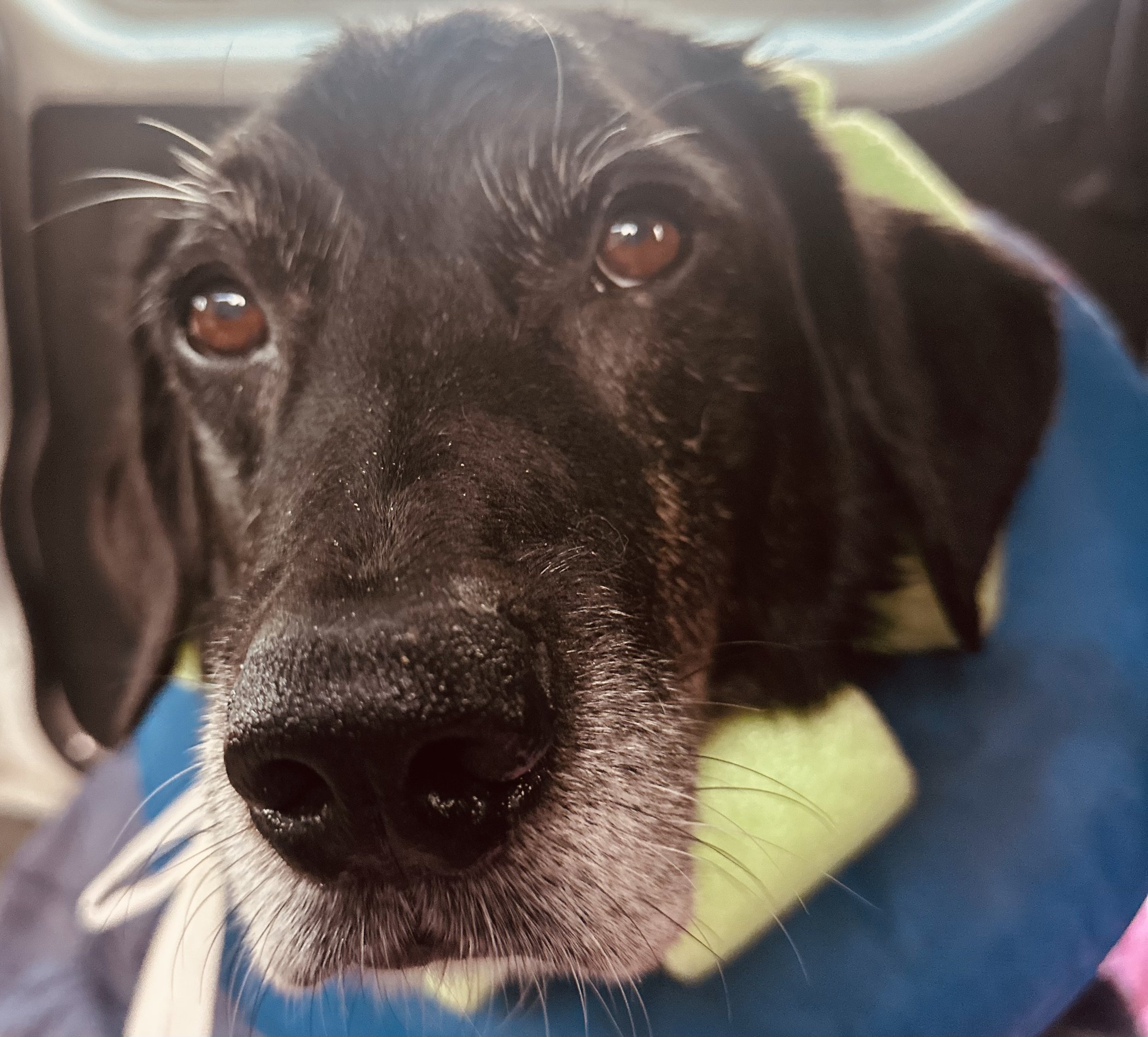
Trust became part of his medical care..
There are veterinary clinics closer to us.
But with Zeus, "closer" isn't necessarily better.
It can take him a long time to trust somebody.
So once he had begun developing relationships with the people treating him, we made the decision to maintain that consistency rather than repeatedly asking him to start again with unfamiliar people.
Then the drive home.
Then medication.
Monitoring.
Keeping his bandage dry.
Watching for infection.
Trying to stop him interfering with a wound when he couldn't tolerate a traditional cone.
Trying to keep him comfortable.
Trying to keep him calm.
Trying to preserve the trust we'd worked so bloody hard to build.
And then doing it again a few days later.
The bills tell one part of the story.
On 1 July, Zeus's original surgery was invoiced at $1,737.65.
Then came complications.
Another appointment: $646.30.
Another: $737.65.
Another: $498.60.
Another: $498.60.
Additional antibiotics.
Pain medication.
Bandaging.
Wound cleaning.
Sedation.
At one point, a visit could include $299 for deep sedation and reversal alone, because Zeus couldn't safely tolerate what needed to happen while fully conscious.
And the bills kept coming.
But there are no invoice lines for:
"Two-hour round trip."
"Work cancelled."
"Children's lives rearranged."
"Another sleepless night watching the wound."
"Georgia taking Zeus because you physically can't be in two places at once."
"Hours spent muzzle training so the next appointment might be less frightening."
"Trying three different solutions because your traumatised rescue Dog can't tolerate a cone."
There isn't a dollar figure beside:
emotional exhaustion.
Yet those have been some of the biggest costs of all.
And this is where Zeus's story becomes bigger than Zeus.
I don't tell you this because we regret taking him.
Quite the opposite.
We would choose Zeus again.
But this experience has made me question what we actually mean when we talk about "saving" rescue Dogs.
Getting an animal out of a shelter or foster system isn't necessarily the end of rescue.
Sometimes it's the beginning.
Older Dogs can come with medical problems.
Under-socialised Dogs can require months of rehabilitation.
Dogs who have spent years without appropriate exposure to the world can't simply be dropped into a family & expected to understand it.
& when medical and behavioural needs collide, the level of care required can become enormous.
Yet there is very little infrastructure sitting behind the families who decide to take that on.
The rescue organisations themselves are stretched beyond belief.
They are trying to save animals with limited donations, limited foster homes & limited resources.
That was part of Zeus's story too.
When his cancer diagnosis came, the charity he had come through simply wasn't in a position to fund what could become a significant medical case.
That left incredibly difficult choices.
And ultimately, we chose to adopt him and take responsibility for what came next.
I don't say that to attack the rescue.
I say it because this is exactly the conversation we need to be having.
If rescue organisations don't have the money...
& ordinary families don't have thousands of dollars sitting around...
what happens to dogs like Zeus?
That question keeps sitting with me.
Because Zeus is ten.
He's medically complicated.
He's behaviourally complicated.
He's expensive.
On paper, there are probably easier Dogs to save.
But stand beside him in the forest.
Watch him run.
Watch him swim.
Watch him greet Dogs he once would have reacted to.
Watch him seek affection from people he once couldn't trust.
Watch him sleep safely inside a family home.
And tell me his life is worth less because saving it became expensive.
I can't.
This is why we started asking for help.
Starting a GoFundMe wasn't easy.
We are a family.
We run a small business.
We chose to adopt Zeus.
And there is a part of you that thinks:
He's ours. We should somehow be able to manage this ourselves.
But eventually you realise that community is part of rescue too.
We couldn't keep pretending this wasn't financially & emotionally enormous.
And something beautiful happened when we finally said:
We need help.
People helped.
People donated $10.
$20.
$50.
Someone donated $500!!!!!!
People shared his story.
Clients supported Zeus Adventures.
People we'd never met cared about whether this old Dog got another chance.
And those people became part of Zeus's rescue story too.
Because rescue was never supposed to be one exhausted person quietly trying to fix everything.
It takes foster carers.
Trainers.
Veterinary teams.
Transporters.
Adopters.
Businesses.
Donors.
Volunteers.
And communities willing to care about an animal they've never met.
Zeus still isn't finished.
That's probably the hardest part to explain.
We aren't fundraising for something that happened months ago and is now over.
We're still in it.
The healing has taken far longer than anyone expected.
The appointments continue.
The medication continues.
The driving continues.
The bills continue.
And so does Zeus.
He keeps turning up.
So we will too.
But if his story makes one person understand why rescue organisations need support...
why foster carers need support...
why responsible breeding matters...
why early socialisation matters...
why prevention matters...
why senior rescue Dogs deserve investment...
& why communities need to stop waiting until animals reach crisis point before we care...
then perhaps this little old golden Dog is doing something far bigger than any of us expected.
Because Zeus's story isn't only about saving one Dog anymore.
It's about asking why saving one Dog has to become this hard in the first place.
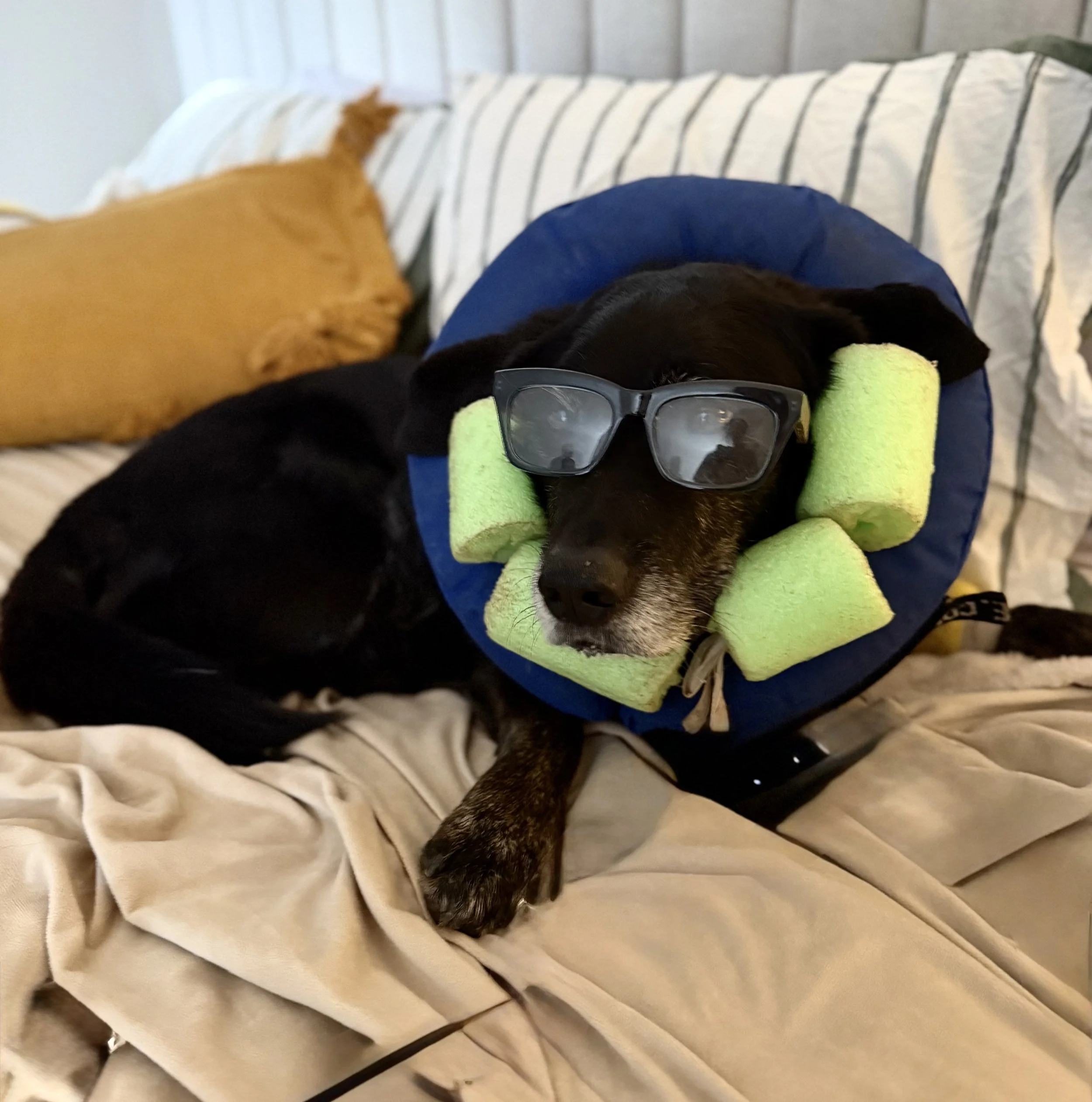
And plenty of people questioned that choice.
“Why don't you just euthanise him?”
“He's old.”
“He's hard work.”
“You already have enough on your plate.”
“You can't save them all.”
And maybe that's the part I struggle with most.
Because that's not good enough for me.
Zeus wasn't suffering from an untreatable illness with no quality of life. If we reached a point where keeping him alive meant prolonging his suffering, I would love him enough to let him go.
But that wasn't the decision in front of us.
The decision was whether an older Dog, with cancer & a complicated history, was still worth investing money, time and energy into.
And to me, he was.
I know I can't save every Dog.
I know I can't personally fix animal welfare.
And I know that good hearted people cannot keep setting themselves on fire trying to fill every crack in a broken system.
That's actually the point.
It shouldn't continually fall to foster carers, rescuers, volunteers, small businesses & ordinary families to sacrifice their own money, time and wellbeing because the systems around them aren't adequately resourced to intervene earlier.
Imagine what could change if we invested more in prevention.
In education.
In accessible desexing and veterinary care.
In behavioural support before Dogs reach crisis point.
In helping families keep their animals when money gets tight.
In properly supporting foster carers and rescue organisations.
In creating systems where asking for help doesn't mean you've already reached breaking point.
Because by the time Zeus reached us, years of opportunity had already been missed.
And then suddenly everyone at the very end of that chain was expected to perform a miracle.
That's backwards.
We need to stop waiting until an animal becomes homeless, traumatised, sick, reactive, elderly or “too expensive” before deciding they're worth helping.
And we need to stop accepting euthanasia as the inevitable answer simply because the alternative requires work.
Sometimes euthanasia is the kindest decision. I will never pretend otherwise.
But convenience is not compassion.
Age is not a reason to stop mattering.
Being difficult is not the same as being disposable.
And needing more from us doesn't make a life worth less.
Zeus has required an enormous amount from us.
Money. Time. Driving. Vet appointments. Behaviour work. Sleepless nights. Worry. Rearranging our lives.
And yes, there have been moments when I've wondered how the hell we're going to keep doing it.
But never once have I looked at Zeus and thought he wasn't worth doing it for.
The system is broken.
And I refuse to become comfortable with that simply because “that's how it is.”
I don't want a world where the people who care the most are expected to carry everything until they burn out.
I want us to build something better.
A system where rescue isn't just crisis management.
Where prevention comes first.
Where humans are supported before they surrender their animals.
Where rescues aren't forced to choose which animal gets the money.
Where foster carers aren't left holding impossible financial and emotional responsibility.
Where older dogs aren't written off because the return on investment doesn't make sense on paper.
And where dogs like Zeus don't need to get extraordinarily lucky just to get the chance to grow old.
Because Zeus shouldn't be alive today simply because he happened to land in the hands of a few stubborn people who refused to give up on him.
He should be alive because we built a system that didn't give up on him in the first place.